Resources
Check out my "Resources" page for a list of great webpages for early career astronomers. I also have a beginning Python tutorial on my github page and occasionally post Python tutorials on my blog, with more on the way!
Exoplanet Astronomer and Astrophysicist

Starting Fall 2026, I am a postdoctoral research scientist in the Atmospheric Physics of Exoplanets department of the Max Planck Institute for Astronomy. I primarily study the atmospheres of transiting giant exoplanets via spectroscopy. My goals are to understand planetary climates and atmospheric compositions and tie these back to the physics of energy transport and planet formation. A major theme of my research is understanding the complementary strengths and weaknesses of ground-based high-resolution and space-based low-resolution spectroscopy for measuring these quantities, as well as the power of combining the two in joint analyses.
I previously earned my PhD in Astrophysics from Arizona State University and Bachelor's degrees in physics and astronomy from the University of Texas at Austin. When I'm not doing science, I love to bake, write, or be outdoors.
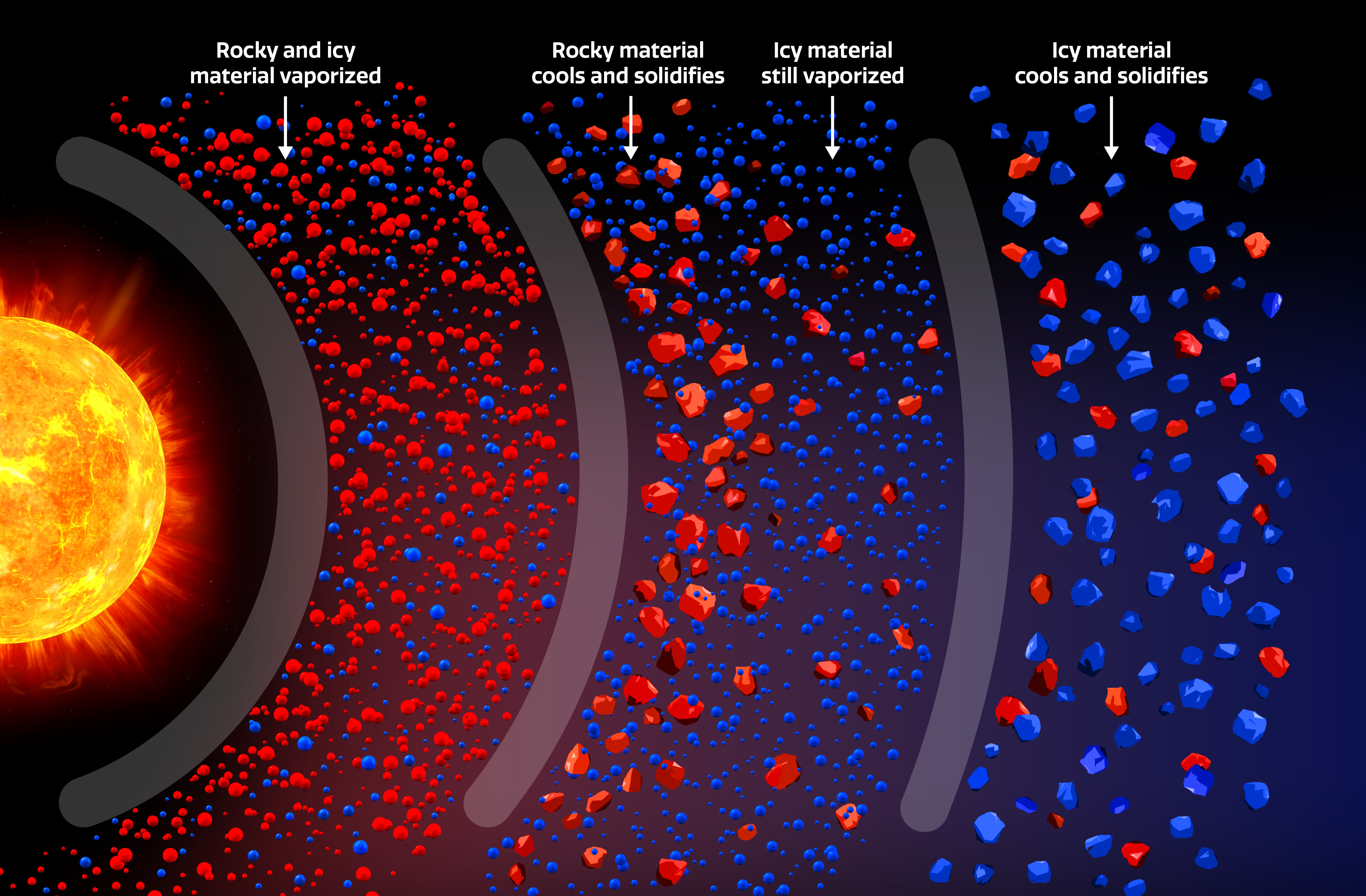
Image Credit: NOIRLab/NSF/AURA/P. Marenfeld
The composition of a gas giant's primary atmosphere retains information about the environment in which the planet formed. Measuring elemental ratios can help us place the planet's initial formation location in the protoplanetary disk. The carbon-to-oxygen (C/O) ratio has been a popular metric to do this, although a given C/O ratio can be degenerate with multiple formation locations. Combining this with the refractory-to-volatile ratio can break these degeneracies. For the first time using a single instrument, I measured the C/O and refractory-to-volatile ratios of a transiting exoplanet - WASP-121 b - with IGRINS/Gemini South. My findings indicated possible formation interior to the water ice line, which is not commonly predicted by conventional planet formation models.
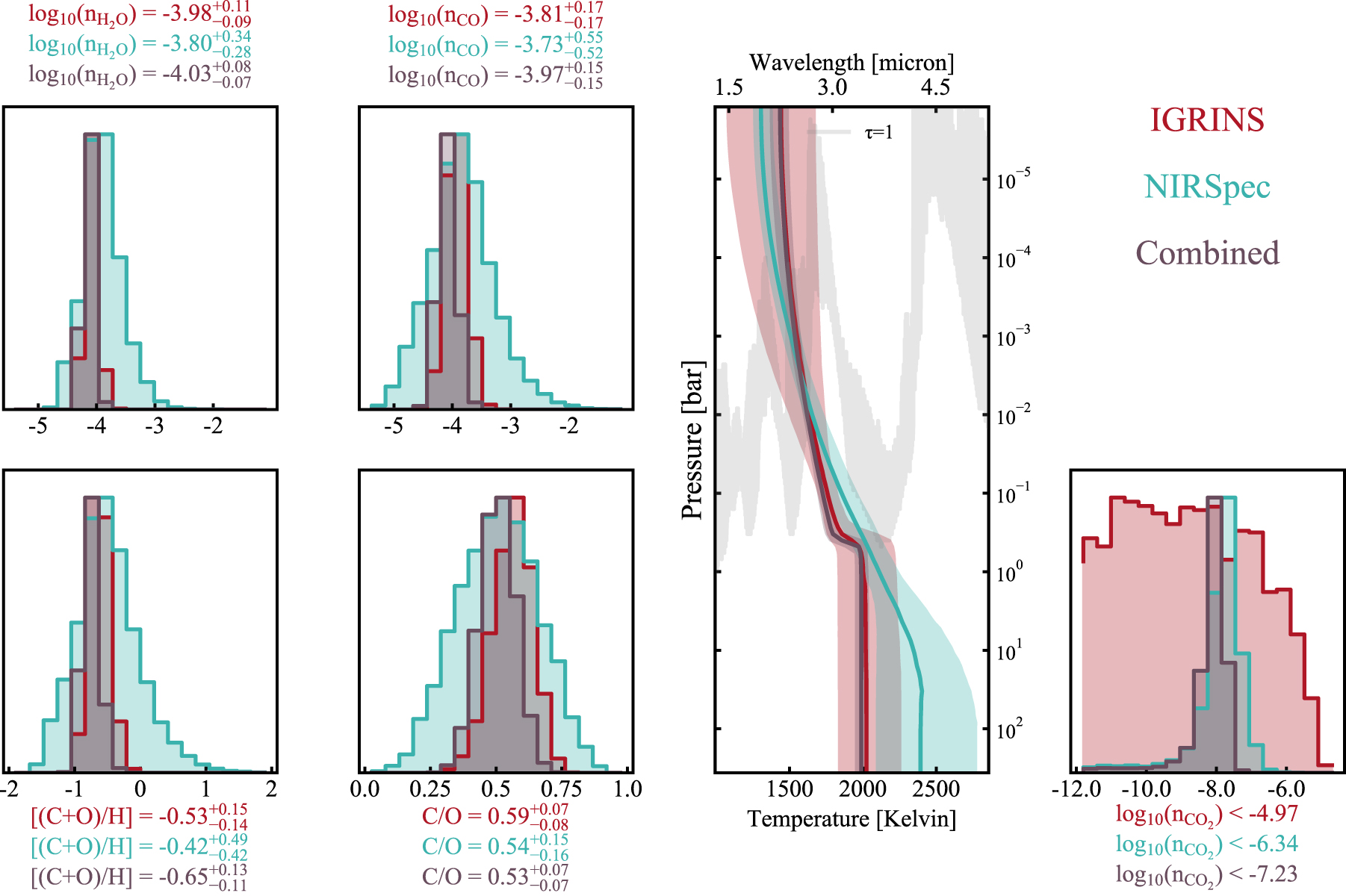
Ground-based high-resolution and space-based low-resolution spectroscopy each afford different strengths and weaknesses for studying exoplanet atmospheres. Fortunately, these stengths are complementary, and combining the two data types in a joint analysis can provide more precise inferences of a planets atmospheric structure than achievable by either method individually. To highlight these capabilities, I performed the first combined retrieval analsyis of JWST and ground-based data for hot Jupiter WASP-77A b.
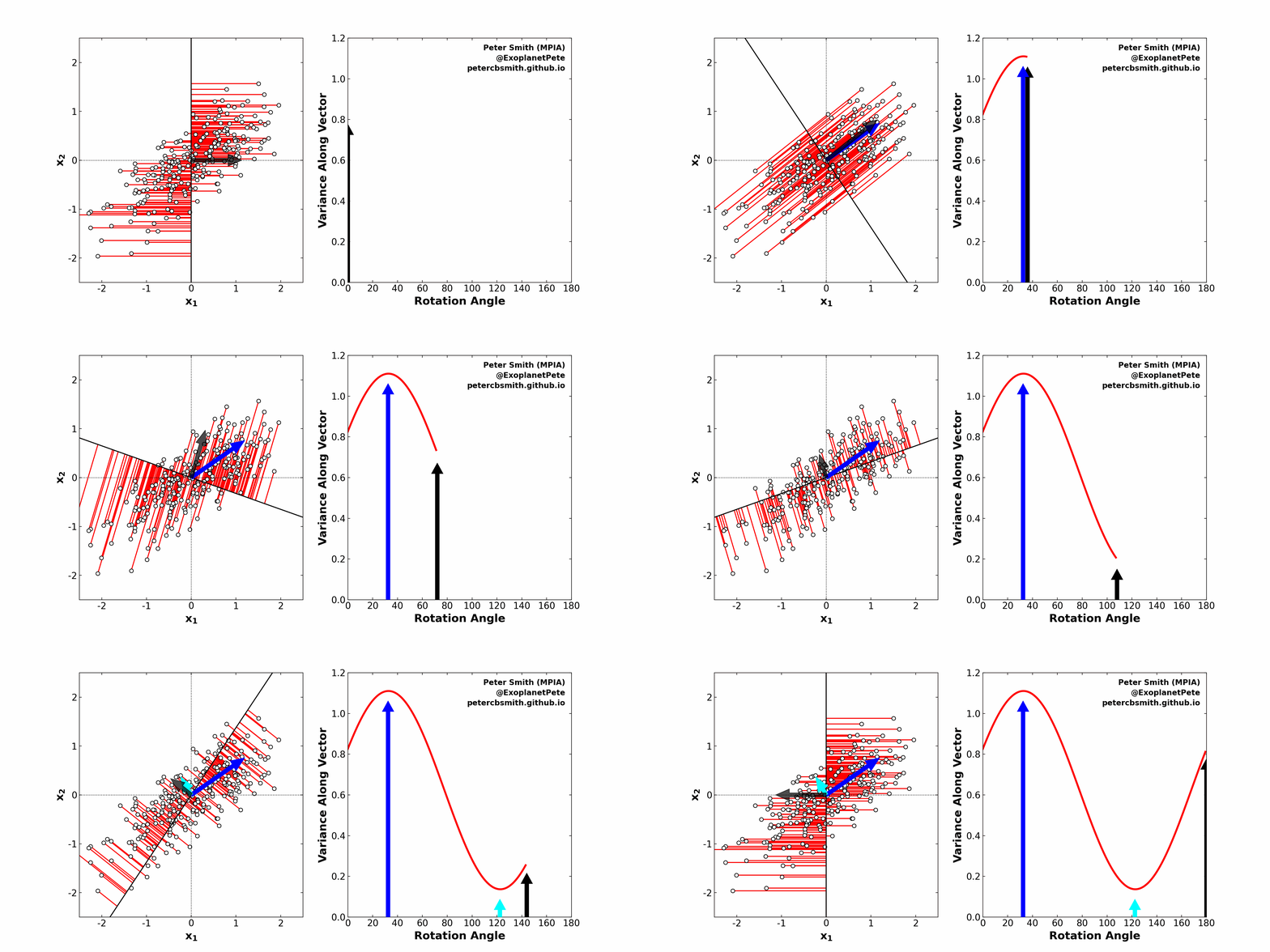
Building up to PCA from the very basics.
Check out my "Resources" page for a list of great webpages for early career astronomers. I also have a beginning Python tutorial on my github page and occasionally post Python tutorials on my blog, with more on the way!